Core Resources’ Chair, Jon Loraine, has been featured in Industry Queensland, sharing his perspective on the future of Queensland’s critical minerals industry.
In the article, Jon emphasises that developing a successful domestic critical minerals sector will require more than standalone mining projects. Instead, he highlights the need for fully integrated supply chains spanning mining, processing, and infrastructure, supported by strategic state involvement.
With many critical minerals projects unlikely to be viable in isolation, the focus is shifting toward building complete, globally competitive supply chains that can support long-term industry growth.
Read the full article below.
State sponsorship critical to future industry
A leading metallurgist says the state will need to underwrite a future critical minerals industry in Queensland.
Brisbane-based Core Resources director Jon Loraine said the industry needed to be considered in terms of the full logistics chain, including mining, processing, infrastructure, sales and marketing.
That was the only way a domestic critical minerals industry would be profitable, Mr Loraine said.
“Queensland and Australia does have world-class resources in the ground. I just think the trick here is we’ve got to look beyond them being just mining projects.
“A lot of them will not stand on their own feet as a very simple dig-up-and-produce sort of mining project, looking at it with those economics.
“They really only work as part of a complete supply chain. And in many cases, the mining is the very simple bit. The refining is often very complex.
“And even if you can make a refined product, you’re not selling into an open transparent market. So you need to have a very close relationship with the end use.
“It’s a whole question about building an entire supply chain. And we need to look at those Australian and Queensland projects in that light.”
Mr Loraine said the US Critical Minerals Framework Agreement was helping reframe the way the critical minerals industry was being developed.
“Look, I think the intentions of the framework agreement are very sound. What it recognises is that most critical minerals do not operate in free, open markets.
“Therefore you’ve got to value that kind of business as an entire supply chain, from mining through to finished product.
“That’s how the Chinese look at it. They do not look at rare earth refining as a separate standalone business. It’s all part of a supply chain from the mine to the manufactured product.
“And for the West to compete in critical minerals, you need to build entire supply chains that are unshackled from China. And it will require some subsidy somewhere in the mix for it to work.”
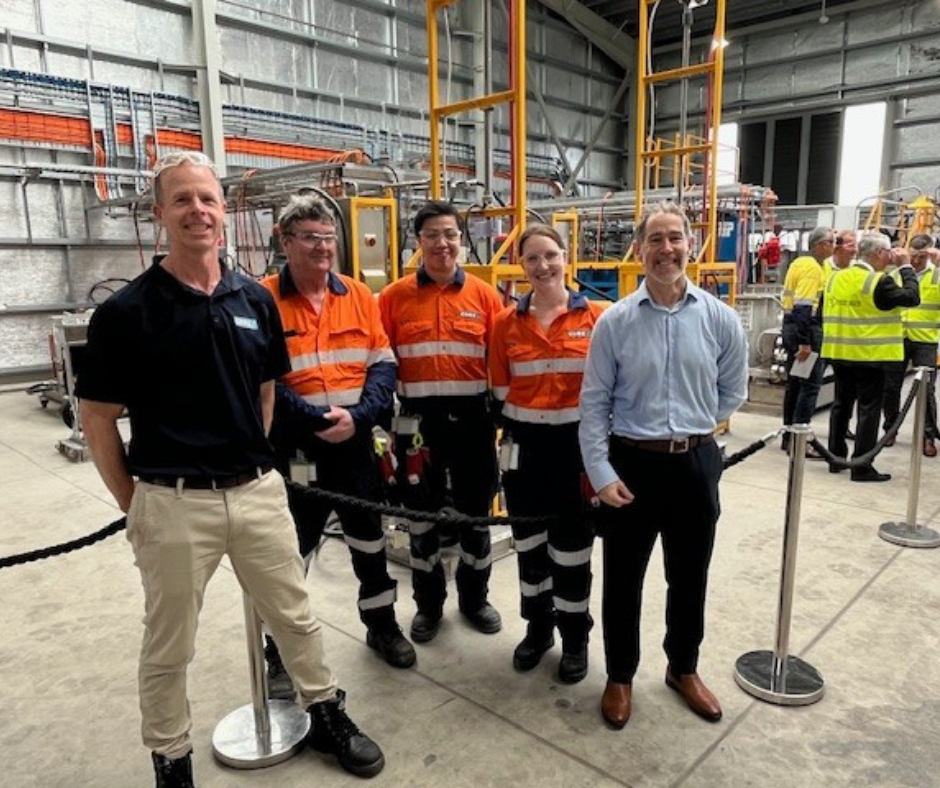
The Queensland Resources Common User Facility in Townsville and the recently opened Mackay Resources Centre of Excellence were good examples of state support, Mr Loraine said.